Professionalism Is Invisible Discipline
 Dalibor Jovic

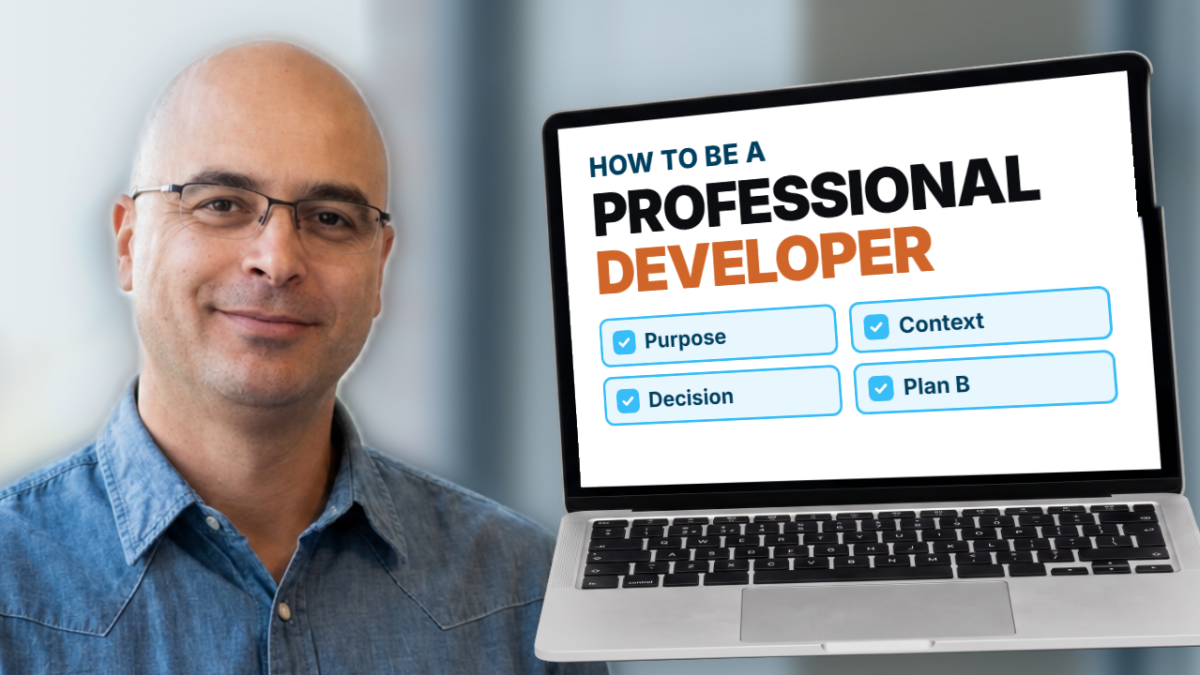
(PDF at the bottom)
Most developers think they are professional because they answer emails and show up on time.
I thought that too.
I replied when people asked me something. I came to meetings. I did my work. I was not throwing chairs through windows, which is always a nice bonus in a professional environment.
So in my head, I was professional.
Then I started working with consultants from McKinsey, Capgemini, and similar companies.
And I realized I was only seeing the visible part.
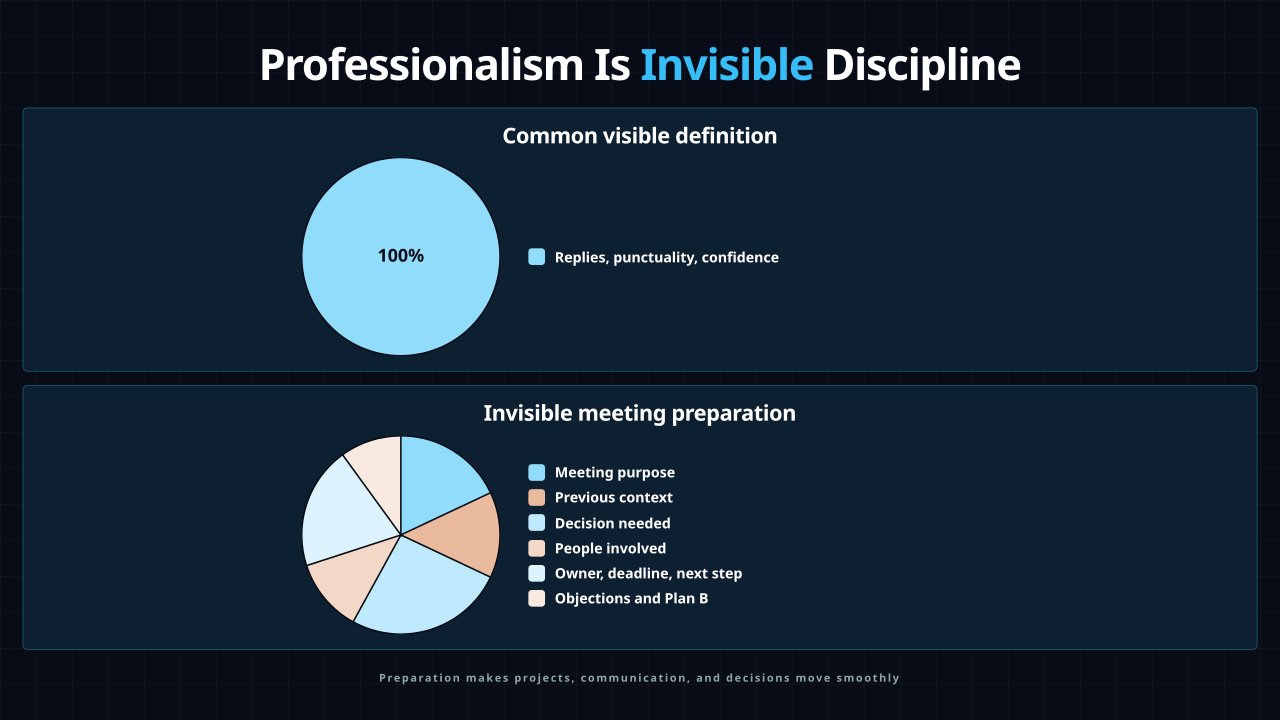
Professionalism was not the email reply. It was not the calendar invite. It was not sounding confident in a meeting.
The visible part was confidence, but the invisible part was preparation.
That sentence changed how I work.
The Moment I Realized I Was Not as Professional as I Thought
Through my career, I worked with a lot of smart people.
Developers. Architects. Team leads. Project managers. Consultants. Directors.
Some were better engineers than me. Some were not.
But there was a certain type of consultant who made everything around them move smoother.
Projects moved smoother.
Communication moved smoother.
Decisions moved smoother.
At first, I thought they were just smarter.
Then I noticed something strange: many of them were not better engineers.
They did not always know more about the codebase. They did not always know more about architecture. They did not always have deeper technical answers.
But when they entered a meeting, the room changed.
Not because they were magic.
Because they were prepared.
The Visible Part Was Confidence
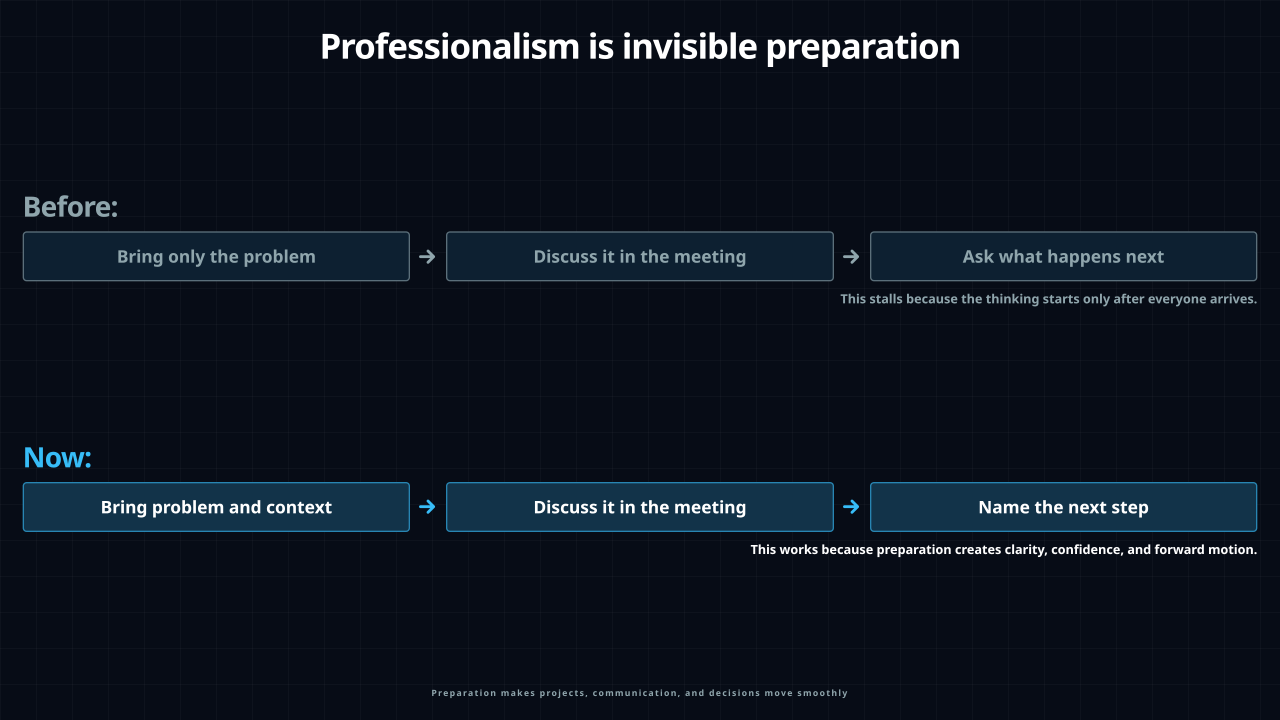
I would walk into a meeting with a problem.
They would walk in with the problem, the context, the likely objections, the decision needed, the people involved, and the next step.
I would ask, "But what now?"
They would show a five-page PowerPoint.
Plan.
Owner.
Deadline.
Next step.
Backup plan.
That is when it hit me.
They were not waiting for the meeting to begin thinking.
They had already done the thinking before everyone else arrived.
And because they had done the thinking, they looked calm.
Because they looked calm, people trusted them.
Because people trusted them, decisions moved.
That is the part many developers miss.
We think confidence creates preparation.
Usually, preparation creates confidence.
The Invisible Part Was Preparation
Professionalism starts before the meeting.
Not when someone asks you a question.
Not when the project manager says, "Any updates?"
Not when the customer is already annoyed.
Before.
The best consultants I worked with had a few invisible habits.
They wrote things down.
They remembered what was discussed last time.
They knew why the meeting existed.
They knew what decision they wanted.
They knew who needed to be involved.
They had thought through objections.
They had a Plan B.
None of this looked special from the outside.
That is why it is so easy to miss.
But this is the difference between attending a meeting and preparing the meeting.
They Knew Why the Meeting Existed
A lot of meetings exist because someone got nervous and clicked "Invite."
You know the type.
No clear purpose. No clear decision. No clear next step. Just 45 minutes of people saying words, then everyone leaves with slightly lower life energy.
Professional people do not accept that as normal.
Before the meeting, ask one question:
What must be different after this meeting?
If the answer is "we need to align," you probably do not have an answer yet.
Do we need a decision?
Do we need input?
Do we need approval?
Do we need to remove a blocker?
Do we need to inform people so they stop being surprised later?
Different purpose, different meeting.
And sometimes, no meeting.
Very advanced technology. You can do a lot with it, unless you use WordPress.
They Knew the Previous Context
One of the easiest ways to lose credibility is to forget what was already discussed.
People notice.
You might think, "It was just one small detail."
But to the person who explained it last week, it was not small.
It tells them you were physically in the room, but mentally somewhere else.
This is why notes matter.
Not fancy notes. Not a beautiful second brain with 74 tags, 12 templates, and a productivity YouTuber crying from happiness.
Just notes you can actually find again.
What was discussed?
What was decided?
What was left open?
Who disagreed?
What did we promise?
What changed since last time?
If you can answer those questions, you are already ahead of many people in the room.
They Knew the Decision Needed
A meeting without a decision is often just a podcast with worse audio.
Before you enter the room, know what decision is needed.
Not what topic you want to talk about.
The decision.
"Should we release this now or wait?"
"Should we choose option A or option B?"
"Who owns this?"
"Do we accept this risk?"
"Do we need more information before we decide?"
This matters because smart people can discuss forever.
Developers especially.
We can turn a simple naming discussion into a three-part documentary series.
So your job is not always to have the answer.
Sometimes your job is to frame the decision so the right people can make it.
That is professional.
They Knew the Owner, Deadline, Next Step, and Plan B
Here is the simple rule:
If there is no owner, there is no task.
If there is no deadline, there is no urgency.
If there is no next step, there is no progress.
If there is no Plan B, there is no preparation.
This is where many technical people lose business credibility.
They explain the problem well.
They explain the complexity well.
They explain why everything is difficult very well.
But then the room waits for the adult part:
"So what do we do now?"
This is where preparation pays off.
You should be able to say:
"Here is the recommended next step."
"Here is who should own it."
"Here is when we need it."
"Here is the risk."
"Here is the fallback if this does not work."
You do not need to be the boss to do this.
You just need to be one step ahead.
Copy the System, Not the Surface
When I worked with those consultants, I treated it like a free elite course in conducting business.
You do not find that course on YouTube.
You find it by watching how people behave when the stakes are real.
So I took a lot of notes.
I copied what I could.
But the important part was this: I did not copy only what they said in meetings.
I copied what they did before meetings.
That is the mistake many people make.
They copy the surface.
The slide design.
The phrasing.
The confident tone.
The nice jacket, if you are into that kind of dangerous territory.
But the real skill is under the surface.
It is written thinking.
It is preparation.
It is asking, "What will block this?"
It is asking, "Who needs to be involved before this becomes political?"
It is asking, "What will the customer ask that we do not want them to ask?"
It is asking, "If this fails, what do we do next?"
That is what makes you look professional without acting like you are performing professionalism.
Treat Yourself as the Project
At some point in my career, I realized something uncomfortable.
I spent years improving systems, processes, products, and teams for companies.
But I had become the bottleneck in my own career.
Technical skill got me into the room.
But to stay there, and to be taken seriously, I needed more.
Communication.
Planning.
Business understanding.
Follow-up.
Mentoring.
How to conduct myself.
How to see blind spots before they became expensive.
So I started treating myself as the project.
I learned to use a calendar properly.
I planned my week, my month, and my year.
I wrote things down.
I used reminders.
I built systems so I did not have to keep everything in my head.
Because your head is a terrible project management tool.
It is good for ideas.
It is bad for remembering that you promised someone a decision by Friday.
I also started actively asking people ahead of me:
"What should I learn next?"
"How should I conduct myself?"
"What blind spots do you see?"
That last question is painful.
Ask it anyway.
You cannot fix what you refuse to see.
A Practical Checklist for Your Next Meeting
For your next meeting, do not just attend.
Prepare.
Before the meeting, write down:
- Why does this meeting exist?
- What was discussed last time?
- What changed since then?
- What decision is needed?
- Who needs to be involved?
- Who owns the next step?
- What is the deadline?
- What objections will come up?
- What evidence do we need?
- What is the Plan B?
This does not need to take two hours.
Sometimes five minutes is enough.
But those five minutes change how you show up.
You stop reacting.
You start leading the work, even if you are not the formal leader.
That is how you move from "developer who answers questions" to "person people trust with decisions."
Professionalism Makes Work Easier for Everyone Around You
Technical skill gets you into the room.
Preparation helps you stay there.
The people who are trusted with leadership, architecture, strategy, communication, and mentoring are not always the loudest.
They are not always the most confident by personality.
They are often the people who make work easier for everyone around them.
They reduce confusion.
They remember context.
They make decisions clearer.
They follow up.
They give owners, deadlines, next steps, and backup plans.
That is professionalism.
Not the visible surface.
The invisible discipline.
And the good news is that this is not a personality trait.
You can copy it.
You can practice it.
You can build a system around it.
Pick your next meeting and prepare like the professional you want to become.
Categories: : Career & growth
"Applicable Bytes" newsletter
Get The Applicable Bytes here: Growth in programming, technical leadership & AI.