Spec Driven Development in AI Age
 Dalibor Jovic

Are you stuck at "AI as Auto-Complete" level? That is because your code is not tough trough, and it can brake any second.Spec Driven Development helps
Most developers still treat code as the source of truth.
Not the documentation. Not the architecture diagram. Not the specification.
The code.
And for a long time, that made sense.
If the documentation was wrong, we changed the documentation.
If the diagram was old, we ignored the diagram.
If the business rule was unclear, we opened the code and checked what the system actually did.
Code was not just code.
It became the documentation, the business logic, the decision log, and the final authority, all at once.
The problem is that AI changes this.
AI makes code cheap.
Not because engineering is suddenly easy, but because producing code that looks correct is now fast.
And sometimes fast enough to be dangerous.
Most teams are still stuck in the old belief: code is precious.
So they use AI as autocomplete.
AI writes a function. AI explains a file.
AI helps with a small refactor.
But the big decisions still live somewhere else: in old code, half-finished documentation, and the developer’s head.
And honestly, I understand why.
If code is the source of truth, letting AI rewrite it feels terrifying. You still own every line. You still need to review it, understand it, fix it, and maybe even like it.
Very romantic.
Also a bit painful.
This belief creates three problems:
- We ask AI to understand old code from weak documentation, then act surprised when it misses context.
- We let AI write small pieces, but keep the system design hidden.
- We protect code that should be disposable because our decisions were never written down anywhere better.
Here’s the uncomfortable part:
If AI makes code cheap, the thing worth protecting is no longer the code.
It is the specification.
The belief is flawed because code is no longer the expensive part
The expensive part is deciding what should exist.
What should the system do? What rules matter? Where are the boundaries?
What tradeoffs are acceptable? How should data move from the database to the browser?
What should AI never decide on its own?
That judgment is the valuable part.
The implementation is becoming output.
I built and shipped a mobile app without writing a single line of code.
But I did not vibe-code it.
That distinction matters.
Because I can rebuild the same app again, the same way, and it behaves the same way.
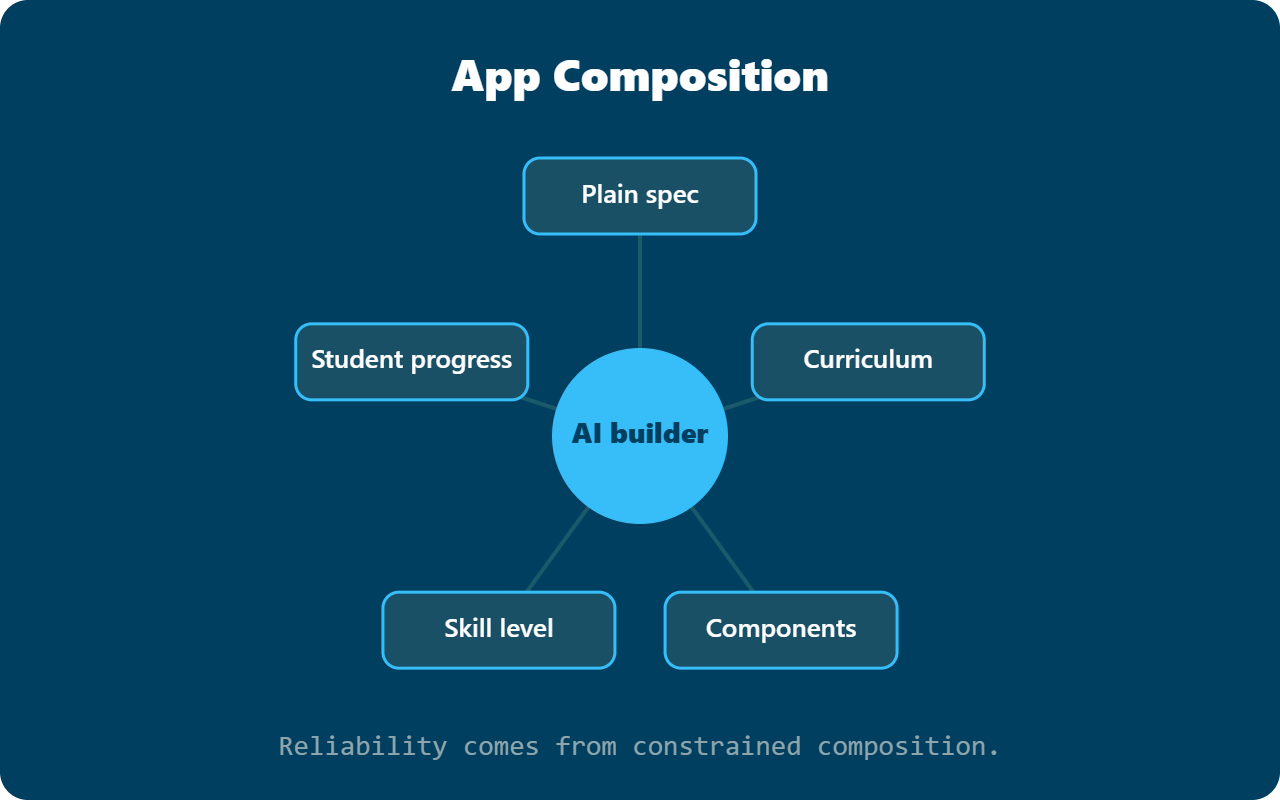
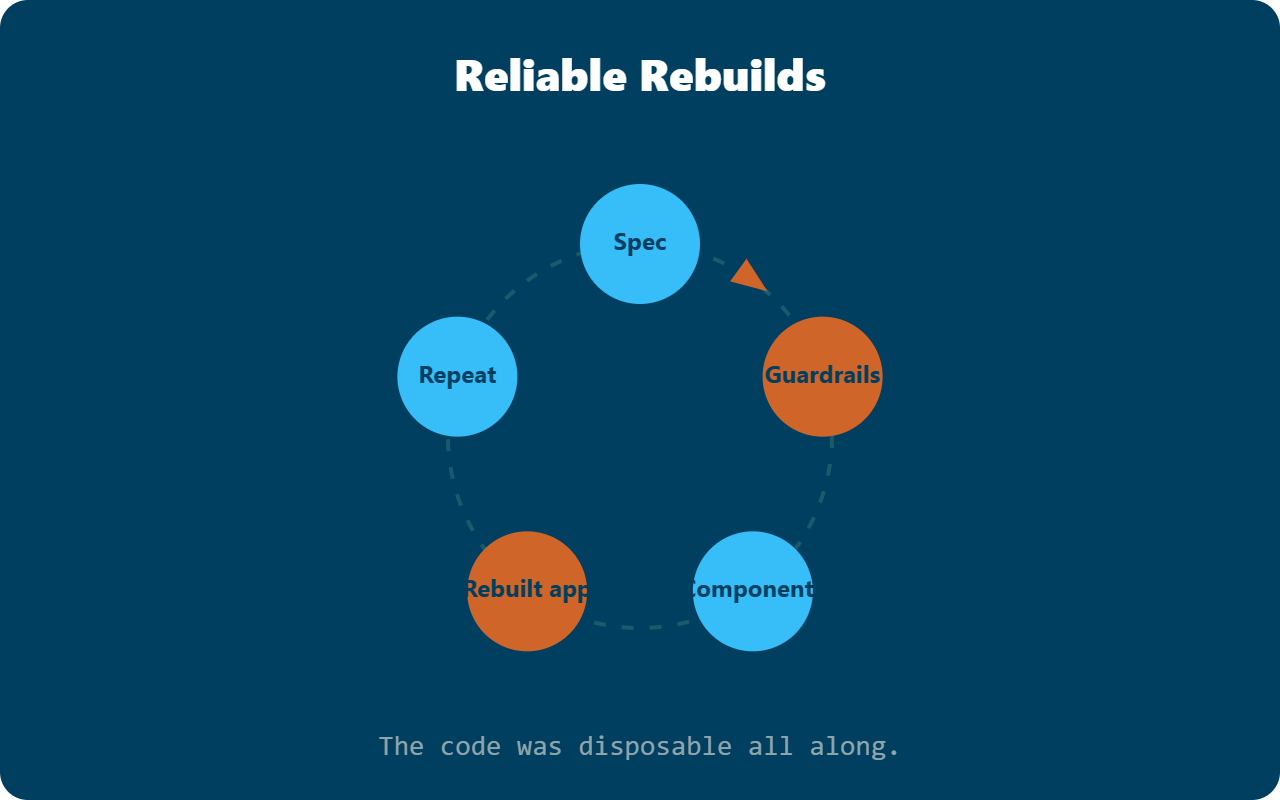
That does not happen because AI magically became perfect. It happens because the app is driven by specifications, guardrails, and finished components.
This is where the compiler analogy becomes useful.
You already write code in JavaScript, Python, or another language, then trust another layer to turn that intent into something the machine can run.
IBM has said the FORTRAN compiler was not trusted at first because people did not trust compilers.
Today, we barely think about it.
We trust compilers because the input is structured, the rules are clear, and the output is repeatable enough to build real systems.
AI is not the same as a compiler.
A compiler is deterministic. AI is probabilistic.
But that does not mean AI cannot become the next translation layer for some software work.
It means the input has to be stronger.
Weak prompt, weak output.
Strong specification, better output.
Clear guardrails, more reliable rebuilds.
This is the flip:
The spec becomes the real source. The code becomes generated output.
And yes, this hits developers emotionally.
For 20 years, being good often meant writing better code than the person next to you. We built identities around languages, frameworks, patterns, and sometimes defended them like family.
I was there as well.
So when someone says code is cheap and disposable, your brain hears:
“Your career is useless now.”
But that is not what this means.
AI does not remove the developer.
It promotes the developer one level higher.
Your value moves from typing every implementation detail to deciding what should be built, how it should behave, and how to encode that judgment so the machine can help you build it again.
Make the specification the source of truth
Start by writing plain-text specs close to the code.
Not giant documents nobody reads.
Small, useful files that describe:
- rules for writing the code
- architectural decisions
- module behavior
- component behavior
- business rules
- data flow
- constraints AI must respect
- decisions you do not want rediscovered every sprint
Then build from that.
If AI produces something wrong, do not patch around the generated code forever.
Fix the source of truth.
Fix the spec.
Then rebuild.
That is the mindset shift.
Old way: “The code is right, everything else explains it.”
New way: “The spec is right, the code is produced from it.”
This changes how you work with AI.
Instead of asking it to guess your system from scattered files and old comments, you give it the rules before it starts.
Instead of reviewing every output like a suspicious stranger, you reduce what AI is allowed to decide.
Instead of hoping the generated code is good, you define what “good” means first.
This is exactly why my Studio.com app works reliably.
On the left, I can describe how the app should behave, which elements should appear, in which order, and what content they should include.
AI does not invent everything from nothing.
It works with my curriculum, my teaching material, Studio’s predefined components, and student progress.
It has a catalog of components, like quizzes, video players, and practice cards.
That is why it can rebuild scenarios reliably.
Not because AI is magic.
Because its freedom is limited.
The more important the system, the more important the limits.
Code-as-truth is going away because AI turned implementation into output
If you still treat code as the only source of truth, AI stays trapped at autocomplete level.
It can help you write faster.
But it cannot safely help you build bigger, because the real decisions are hidden in places AI has to guess from.
That does not scale.
Spec-driven development fixes the direction.
You write down the judgment first.
AI generates from that judgment.
When the output is wrong, you improve the spec.
Over time, the system becomes easier to rebuild, not harder to understand.
This is why the old way starts to break:
- AI can produce code faster than teams can comfortably reason about it.
- Documentation generated from code still starts from the wrong source.
- Rewrites are scary when the only truth lives inside the old implementation.
- Teams need repeatability, not just faster typing.
The future developer is not less valuable.
The future developer is the person who can define the system clearly enough that AI can help build it safely.
That means architecture still matters.
Debugging still matters.
Security still matters.
Design patterns still matter.
But the place where you express those skills changes.
You put them into the spec.
The code underneath may become something you rebuild many times.
Your judgment should not.
If you want to see this in practice, try my Studio.com AI learning app through the launch discount.
That is where spec-driven development stops being theory and starts feeling like the next layer of software.
Categories: : AI
"Applicable Bytes" newsletter
Get The Applicable Bytes here: Growth in programming, technical leadership & AI.